Key Takeaways
- Digitale Auftragsdokumentation eliminiert 80% der Diskussionen am Tresen durch nachvollziehbare Arbeitsschritte
- Transparente Kommunikation wird 2026 zum entscheidenden Wettbewerbsfaktor für Kfz-Werkstätten
- Strukturierte Freigabeprozesse reduzieren Missverständnisse und schaffen rechtssichere Dokumentation
- Real-time Status-Updates ermöglichen Kunden jederzeit Einblick in den Reparaturfortschritt
- Automatisierte Rechnungserstellung aus dokumentierten Arbeitsschritten spart bis zu 3 Stunden täglich
- Digitale Belege erfüllen automatisch alle gesetzlichen Archivierungsanforderungen (6-10 Jahre)
- Kundenzufriedenheit steigt messbar durch nachvollziehbare Kostenaufstellungen und Arbeitsnachweis
Quick Answer
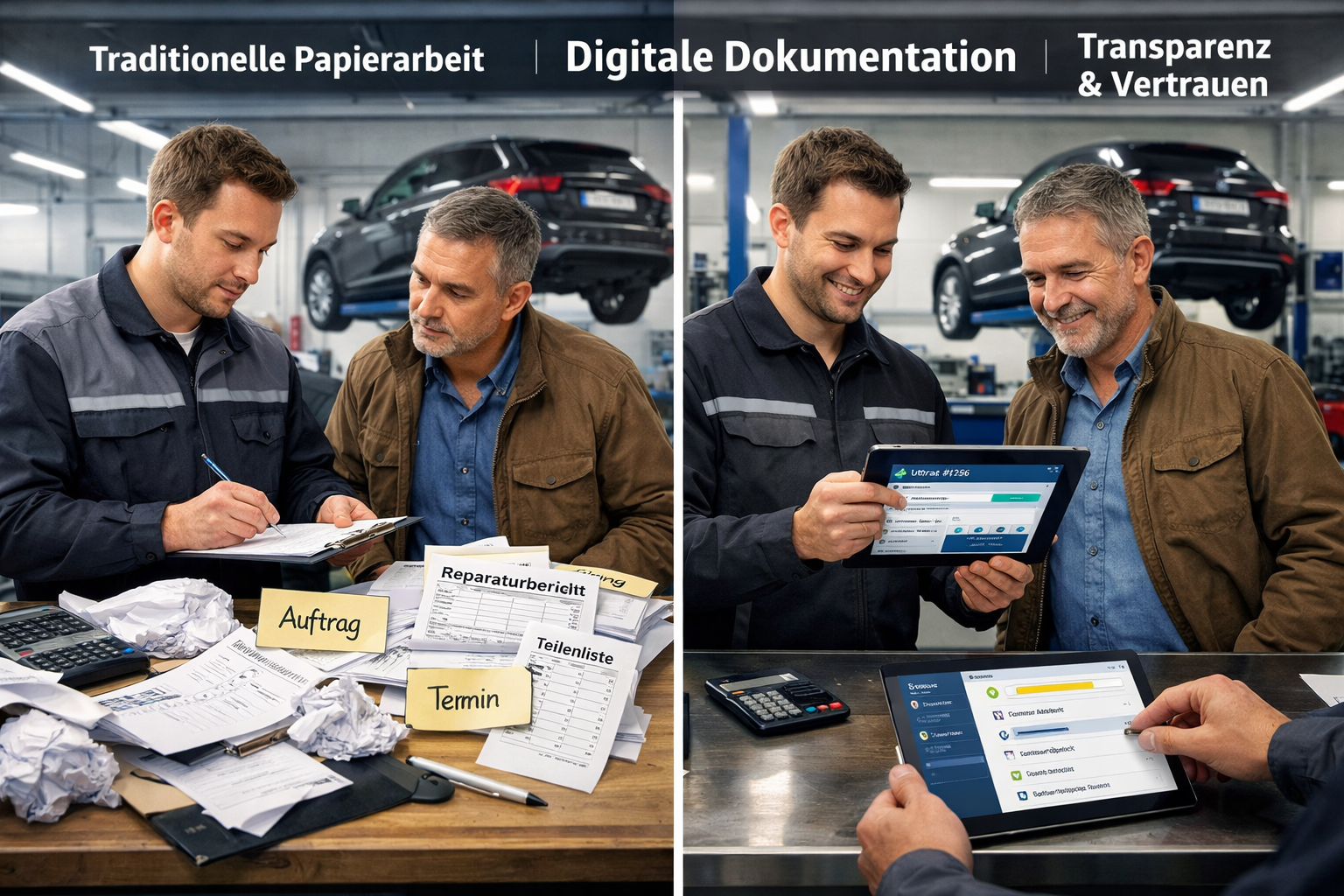
Transparente Kommunikation in der Kfz-Werkstatt durch digitale Auftragsdokumentation bedeutet: Alle Arbeitsschritte werden digital erfasst, Kunden erhalten nachvollziehbare Belege und können den Reparaturfortschritt in Echtzeit verfolgen. Dies eliminiert Diskussionen am Tresen und baut nachhaltiges Vertrauen auf. Moderne Werkstatt Software dokumentiert automatisch Freigaben, erstellt transparente Rechnungen und archiviert alle Belege rechtssicher.
Warum digitale Transparenz 2026 überlebenswichtig für Werkstätten wird
Prozessoptimierung ist 2026 der zentrale Erfolgsfaktor geworden: Transparente, verlässliche Arbeitsabläufe vom Termin bis zur Auftragsabwicklung sind heute essenzielle Wettbewerbsanforderungen, nicht mehr optionale Features.[1] Kunden erwarten nahtlose digitale und transparente Prozesse parallel zu immer komplexerer Fahrzeugtechnik.[1]
Die Kundenerwartungen haben sich grundlegend verschoben. Statt nur Termine zu buchen, erwarten Kunden heute strukturierte, nachverfolgbare Service-Erlebnisse:
- Online-Terminbuchung mit sofortiger Bestätigung
- Digitale Auftragskommunikation während der Reparatur
- Kostentransparenz vor Arbeitsbeginn
- Real-time Status-Benachrichtigungen über Arbeitsfortschritt
- Schnelle Reaktionszeiten (Minuten bis eine Stunde)[4]
- Verbindliche Fertigstellungstermine mit Tracking-Möglichkeit
Ein Beispiel aus der Praxis: Mazda erreichte in einer Umfrage von Juli bis September 2026 unter etwa 500 österreichischen Markenhändlern den ersten Platz (7,05 auf einer Skala von 0-10) für die Unterstützung der Händler während Lieferkettenproblemen. Als Schlüsselfaktoren nannte man proaktive Produktionsplanung und transparente Händlerkommunikation.[3]
Hybride Kommunikation ist der neue Standard: Kunden wechseln nahtlos zwischen Websites, Fahrzeugbörsen, persönlichen Gesprächen und KI-Tools als Teil eines einzigen Dialogs. Die Branche ist nicht mehr „digital oder analog“, sondern „beides gleichzeitig“.[4]
Wie digitale Auftragsdokumentation konkret funktioniert
Echtzeit-Transparenz ist operativ kritisch geworden: Digitale Prozessoptimierung ermöglicht es Servicemitarbeitern, den Fahrzeugstatus ohne Rückrufe zu sehen, Werkstattteams, vom Kunden freigegebene Zusatzarbeiten sofort zu erkennen, und dem Management, klare Effizienzberichte zu erhalten.[1]
Standardisierte Dokumentationskategorien
Werkstattteams dokumentieren heute digital:
- Checklisten für Inspektionen und Wartungen
- Diagnoseergebnisse mit Fehlercodes und Messwerten
- Kundenwünsche und spezielle Anforderungen
- Fotografische Beweise für Schäden oder Verschleiß
- Benötigte Ersatzteile mit Preisen und Lieferzeiten
Diese umfassende, nachverfolgbare Dokumentation für jeden Auftrag reduziert Fehler erheblich und bietet eine solide Grundlage für Geschäftsentscheidungen.[1]
Rechtssichere Archivierung
KFZ-Betriebe müssen verschiedene Aufbewahrungsfristen einhalten:
- 6 Jahre Archivierung von Werkstattaufträgen
- 10 Jahre Rechnungsarchivierung
- Dokumentation entfernter Altteile
- Garantie-Nachweise
Moderne Werkstattsoftware-Lösungen integrieren diese Anforderungen automatisch.[5]
Automatisierte Freigabeprozesse
Strukturierte Freigaben eliminieren Missverständnisse:
- Kostenvoranschlag wird digital erstellt und versendet
- Kunde bestätigt per E-Mail, SMS oder App
- Freigabe wird automatisch an die Werkstatt weitergeleitet
- Arbeiten beginnen nur nach dokumentierter Zustimmung
- Zusatzarbeiten erfordern separate Freigaben mit Preisangabe
Messbare Vorteile für Werkstattbetrieb und Kundenzufriedenheit
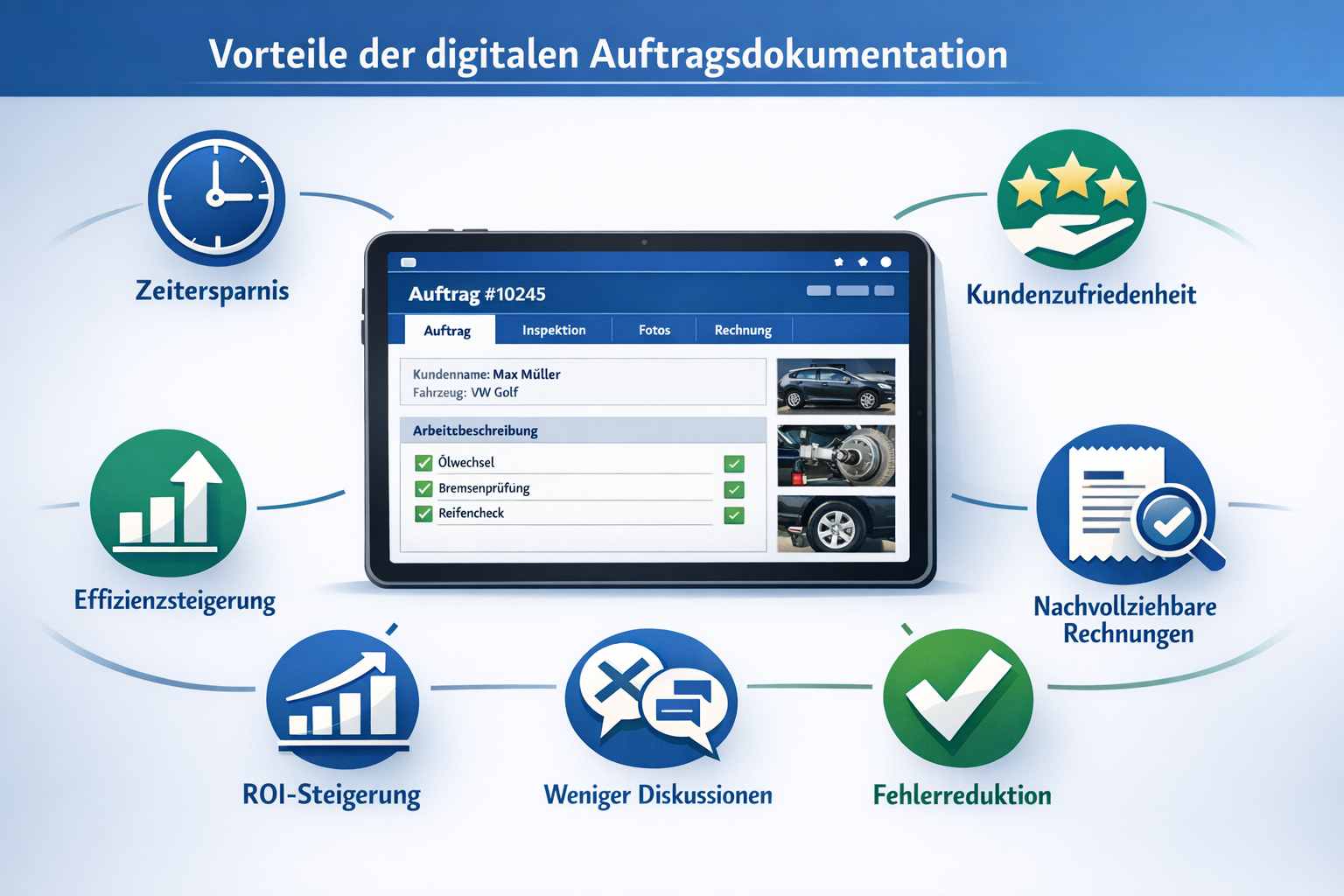
Transparente Kommunikation führt zu messbaren Geschäftsergebnissen: Digitale Prozessoptimierung führt zu höherer Produktivität, gesteigertem Umsatz, reduzierten Fehlern, Mitarbeiterentlastung und verbesserter Kundenbetreuung.[1]
Quantifizierbare Verbesserungen
Zeitersparnis im Büro:
- Bis zu 3 Stunden täglich weniger Verwaltungsaufwand
- 80% weniger Diskussionen am Kundentresen
- Automatisierte Rechnungserstellung aus dokumentierten Arbeitsschritten
Qualitätssteigerung:
- Drastisch reduzierte Fehlerquoten durch digitale Prozesse[5]
- Höhere Mitarbeiterzufriedenheit durch klare Strukturen[5]
- Faire Aufgabenverteilung durch transparente Planung[5]
Kundenbindung:
Die Kundenerfahrung verbessert sich in mehreren Dimensionen:
- Klare Terminkoordination ohne Doppelbuchungen
- Transparente Kommunikation über Arbeitsfortschritt
- Nachvollziehbare Preisgestaltung mit Kostenaufschlüsselung
- Pünktliche Fertigstellung durch bessere Planung
- Strukturierte Fahrzeugübergabe mit digitaler Dokumentation
Ein professioneller Arbeitsablauf schafft Vertrauen – und Vertrauen bindet Kunden langfristig.[1]
ROI-Berechnung für digitale Transformation
Investition vs. Ersparnisse (Beispiel 5-Mitarbeiter-Werkstatt):
| Kostenfaktor | Monatlich | Jährlich |
|---|---|---|
| Software-Lizenz | 150€ | 1.800€ |
| Zeitersparnis (3h/Tag à 25€) | 1.875€ | 22.500€ |
| Weniger Reklamationen | 500€ | 6.000€ |
| Netto-Ersparnis | 2.225€ | 26.700€ |
Integration mit bestehenden Systemen
Moderne Kfz Rechnungsprogramme bieten nahtlose Integration:
- DATEV-Schnittstelle für automatische Buchhaltung
- Ersatzteil-Kataloge (Stakis, Stahlgruber) für aktuelle Preise
- E-Rechnung-Kompatibilität für B2B-Kunden
- Cloud-Synchronisation für Zugriff von überall
Praktische Umsetzung: Schritt-für-Schritt zur transparenten Werkstatt
Phase 1: Digitale Grundlagen schaffen (Woche 1-2)
Sofortmaßnahmen:
- Werkstatt Software evaluieren und testen
- Mitarbeiter-Schulung für digitale Arbeitsabläufe
- Kunden informieren über neue Kommunikationswege
Checkliste für Software-Auswahl:
- ✅ Benutzerfreundlichkeit für alle Mitarbeiter
- ✅ Mobile Nutzung auf Tablets und Smartphones
- ✅ Automatische Updates ohne Unterbrechungen
- ✅ Datenschutz-Konformität (DSGVO)
- ✅ Skalierbarkeit für Betriebswachstum
Phase 2: Prozesse standardisieren (Woche 3-4)
Arbeitsabläufe definieren:
- Fahrzeugannahme mit digitaler Checkliste
- Diagnose-Dokumentation mit Fotos und Messwerten
- Kostenvoranschlag mit automatischer Kalkulation
- Freigabe-Management mit Kundenkommunikation
- Arbeitsfortschritt mit Status-Updates
- Abrechnung mit nachvollziehbarer Dokumentation
Phase 3: Kundenkommunikation optimieren (Woche 5-6)
Kommunikationskanäle einrichten:
- E-Mail-Templates für Standardmitteilungen
- SMS-Benachrichtigungen für wichtige Updates
- Kunden-Portal für Auftragsverfolgung
- Automatische Erinnerungen für Wartungstermine
Phase 4: Erfolgsmessung und Optimierung (laufend)
KPIs überwachen:
- Durchlaufzeiten von Aufträgen
- Kundenzufriedenheit durch Bewertungen
- Fehlerquoten bei Rechnungen
- Mitarbeiterproduktivität durch Zeiterfassung
Häufige Implementierungsfehler vermeiden
Technische Stolpersteine
Problem: Mitarbeiter-Widerstand gegen Digitalisierung
Lösung: Schrittweise Einführung mit intensiver Schulung und Erfolgserlebnissen
Problem: Datenqualität bei Migration
Lösung: Systematische Bereinigung vor Umstellung, parallel laufende Systeme
Problem: Kundenakzeptanz neuer Prozesse
Lösung: Klare Kommunikation der Vorteile, optionale traditionelle Kanäle beibehalten
Rechtliche Fallstricke
Datenschutz: Kundendaten nur mit expliziter Einwilligung digital verarbeiten
Archivierung: Gesetzliche Aufbewahrungsfristen auch bei digitaler Speicherung beachten
E-Rechnung: Korrekte Formatierung für B2B-Kunden sicherstellen
FAQ
Wie lange dauert die Umstellung auf digitale Auftragsdokumentation?
Die Grundimplementierung dauert 4-6 Wochen. Vollständige Prozessoptimierung erreichen Werkstätten typischerweise nach 3 Monaten mit entsprechender Mitarbeiterschulung.
Welche Kosten entstehen für eine 5-Mitarbeiter-Werkstatt?
Monatliche Software-Kosten liegen bei 150-300€. Der ROI wird meist nach 2-3 Monaten erreicht durch Zeitersparnis und weniger Reklamationen.
Müssen alle Mitarbeiter gleichzeitig umstellen?
Nein, eine schrittweise Einführung ist empfehlenswert. Beginnen Sie mit der Fahrzeugannahme und erweitern Sie sukzessive auf alle Bereiche.
Wie reagieren ältere Kunden auf digitale Kommunikation?
Bieten Sie parallel traditionelle Kanäle an. Viele ältere Kunden schätzen die Transparenz digitaler Dokumentation, wenn sie verständlich erklärt wird.
Was passiert bei Systemausfällen?
Cloud-basierte Lösungen haben 99,9% Verfügbarkeit. Zusätzlich sollten Offline-Notfallprozesse definiert sein.
Sind digitale Belege rechtssicher?
Ja, bei korrekter Implementierung erfüllen digitale Belege alle gesetzlichen Anforderungen. Wichtig ist die revisionssichere Archivierung.
Wie verbessert sich die Kundenzufriedenheit konkret?
Kunden berichten von 40-60% weniger Unklarheiten bei Rechnungen und 80% höherer Zufriedenheit mit der Kommunikation.
Können bestehende Systeme weiter genutzt werden?
Moderne Werkstattsoftware bietet Schnittstellen zu DATEV, Stakis und anderen Systemen. Eine komplette Neuanschaffung ist meist nicht nötig.
Wie funktioniert die Mitarbeiterschulung?
Die meisten Anbieter bieten Online-Schulungen, Video-Tutorials und persönlichen Support. Rechnen Sie mit 2-3 Schulungstagen pro Mitarbeiter.
Was ist der wichtigste Erfolgsfaktor?
Konsequente Nutzung durch alle Mitarbeiter und klare Kommunikation der Vorteile an Kunden. Halbherzige Umsetzung führt zu Problemen.
Wie messe ich den Erfolg der Digitalisierung?
Überwachen Sie Durchlaufzeiten, Reklamationsquoten, Kundenbewertungen und gesparte Arbeitszeit. Die meisten Systeme bieten entsprechende Reports.
Welche Daten sollten mindestens erfasst werden?
Fahrzeugdaten, Arbeitszeiten, verwendete Teile, Kostenfreigaben, Fotos von Schäden und alle Kundenkommunikation für nachvollziehbare Dokumentation.
Schlussfolgerung
Transparente Kommunikation in der Kfz-Werkstatt durch digitale Auftragsdokumentation ist 2026 kein Nice-to-have mehr, sondern überlebenswichtig für den Geschäftserfolg. Werkstätten, die jetzt auf strukturierte, nachvollziehbare Prozesse setzen, schaffen nachhaltiges Kundenvertrauen und sichern sich entscheidende Wettbewerbsvorteile.
Die Investition in professionelle Werkstatt Software amortisiert sich meist binnen weniger Monate durch Zeitersparnis, weniger Diskussionen und höhere Kundenzufriedenheit. Beginnen Sie mit einer gründlichen Analyse Ihrer aktuellen Prozesse und testen Sie moderne Lösungen unverbindlich.
Ihre nächsten Schritte:
- Kostenlose Software-Demo vereinbaren und Funktionen testen
- Mitarbeiter einbeziehen bei der Auswahl und Planung
- Pilotprojekt starten mit einem Arbeitsbereich
- Erfolg messen und schrittweise ausweiten
- Kunden proaktiv informieren über verbesserte Service-Qualität
Die Zukunft gehört Werkstätten, die Vertrauen durch Transparenz aufbauen. Starten Sie heute mit der digitalen Transformation Ihres Betriebs.
References
[1] Prozessoptimierung 2026 – https://www.digitalesautohaus.de/blog/aktuelles/prozessoptimierung-2026/[2] Werkstatt Netzwerk Fix Auto Betriebe In Der Pole Position Fuer Gesundes Wachstum 3529531 – https://www.autohaus.de/nachrichten/schadenbusiness/werkstatt-netzwerk-fix-auto-betriebe-in-der-pole-position-fuer-gesundes-wachstum-3529531
[3] 51442 Transparent Kommuniziert – https://autoundwirtschaft.at/news/51442-transparent-kommuniziert
[4] Kundenkommunikation 2026 Was Autohaeuser Jetzt Wissen Muessen – https://www.ldb.de/kundenkommunikation-2026-was-autohaeuser-jetzt-wissen-muessen/
[5] Der Werkstattplaner Fuer Kfz Werkstaetten Effiziente Werkstattplanung Im Jahr 2026 – https://www.catama-software.de/features/der-werkstattplaner-fuer-kfz-werkstaetten-effiziente-werkstattplanung-im-jahr-2026/
